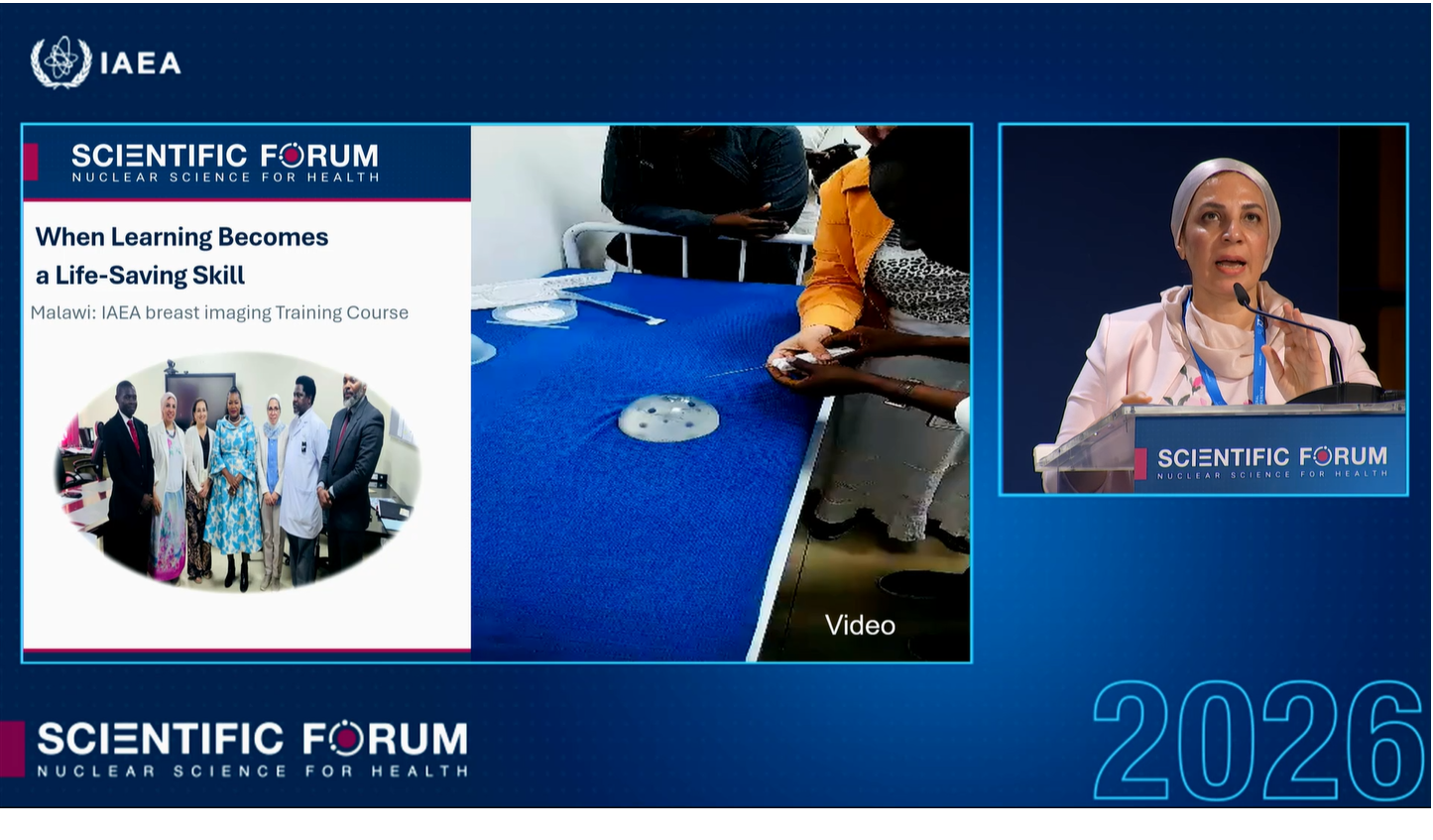
During a session on radiation medicine, Professor Dina Husseiny Salama, Head of the Radiology and Radiation Protection Department at the Egyptian Atomic Energy Authority, presented “From Screening to Palliation: How Medical Imaging Saves Lives.” Her presentation highlighted the importance of early diagnosis and skilled radiologists in improving cancer outcomes.
Prof. Salama also shared examples of capacity-building initiatives, including the IAEA-coordinated National Course on Strengthening Breast Imaging Practices, held at the Malawi National Cancer Centre from May 29 to June 5, 2026. She served as a trainer on behalf of the ISR, contributing to efforts to strengthen breast imaging expertise and cancer detection capacity.
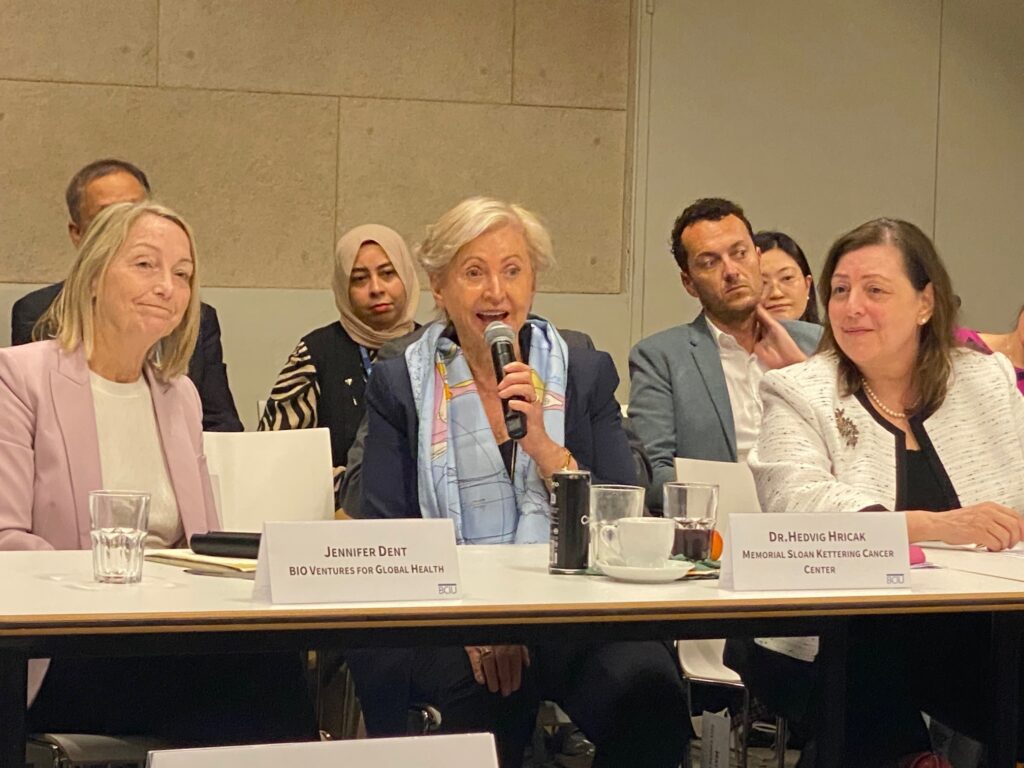
Participating in a panel during the closing session, Prof. Hedvig Hricak highlighted equity and artificial intelligence among the key priorities for the future of cancer care, including solutions to ensure that the benefits of AI also reach low-resource settings where they are needed most. She emphasized that imaging and radiology services must be recognized as essential components of Universal Health Coverage and fully integrated into national cancer control plans.
Prof. Hricak contributed to efforts leading to the 2025 World Health Assembly resolution on strengthening medical imaging capacity and serves as ISR Liaison for Global Imaging Access.
The ISR is pleased to collaborate with the IAEA through formal Practical Arrangements for cooperation in diagnostic and interventional radiology, first concluded in 2021 and extended in 2024 for a further three years. This partnership supports shared efforts to strengthen imaging capacity, professional education, and equitable access to diagnostic services.